
Elite Partner Event
Upgrading monthly showcase pages for 300+ top-ranked B2B merchants on Alibaba.com.
Elite Partner Event (EPE) showcases the industry's top brands and manufacturers on Alibaba.com. When I joined the team, we were gearing up for an upgrade of the existing design. My primary focus during this project was redesigning the merchants' showcase pages.
As the sole product designer on the team, I was responsible for all wireframe designs and planning usability testing. Collaborating closely with a cross-functional team, we worked together to successfully drive the project forward.
Visit the live website here →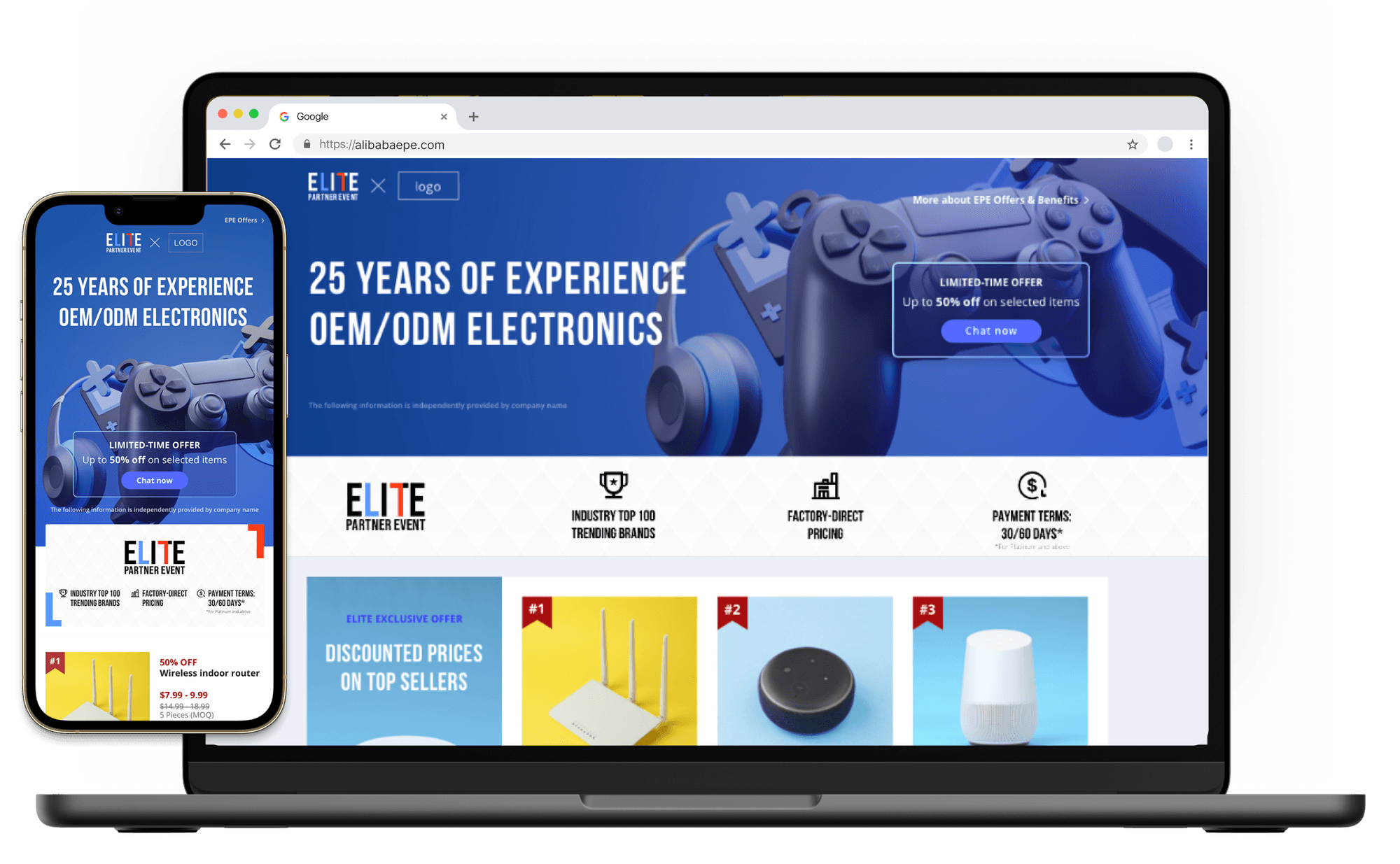
Problems
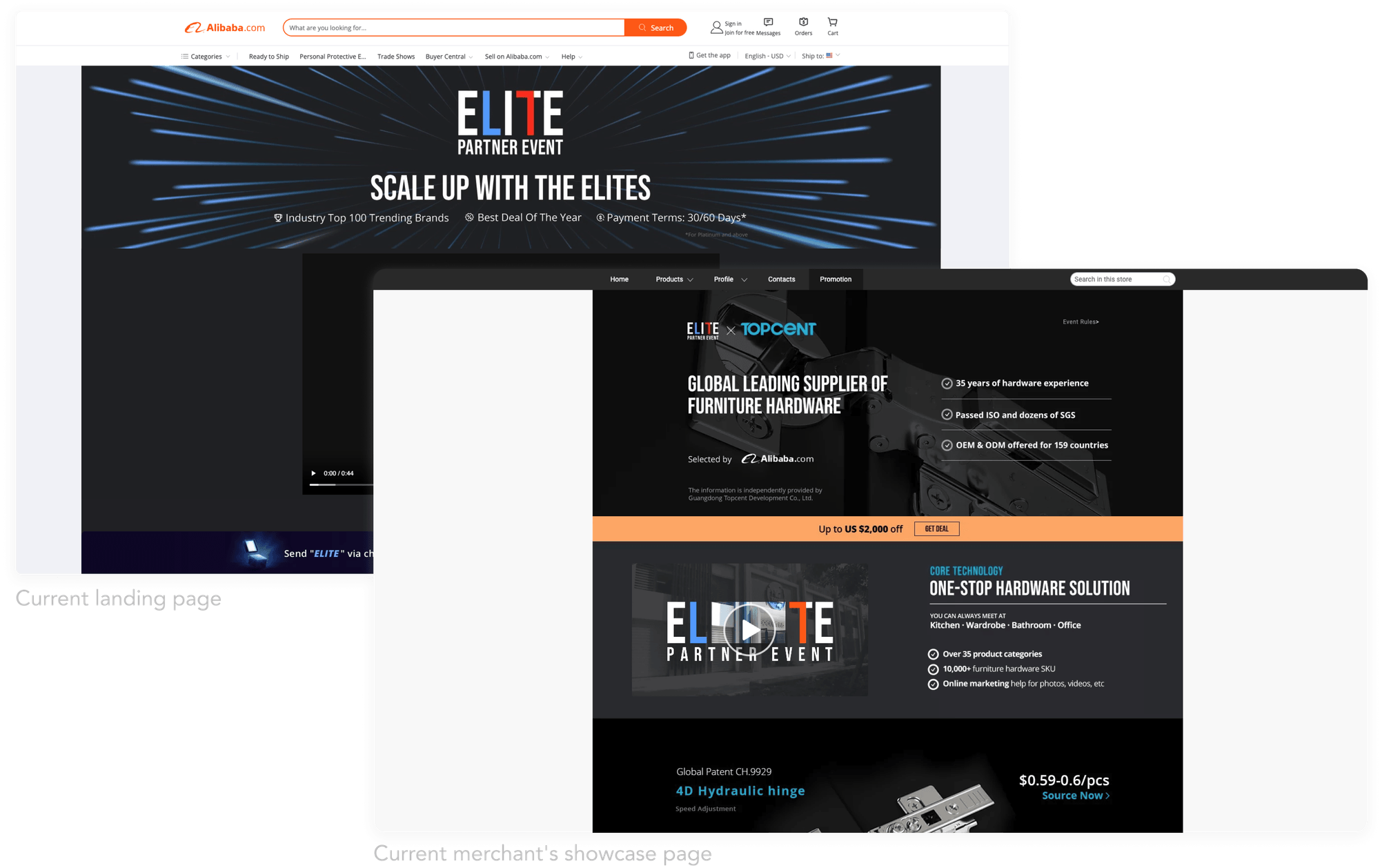
Lack of merchant competitiveness and time-consuming webpage creation processes on current website.
There were two problems of the current design: 1) For users: missing important information to show merchants' competitiveness and uniqueness. 2) For our team: time and effort-consuming to create the webpage for each industry one by one.
Goals
Enhance merchant competitiveness to increase revenue while improving operational efficiency to save budget.
Recognizing the limitations of our current webpages, our goal is to enhance information to emphasize merchants' competitiveness, facilitating buyers in sourcing target products and services, and streamline webpage creation for 300+ merchants.
Solution
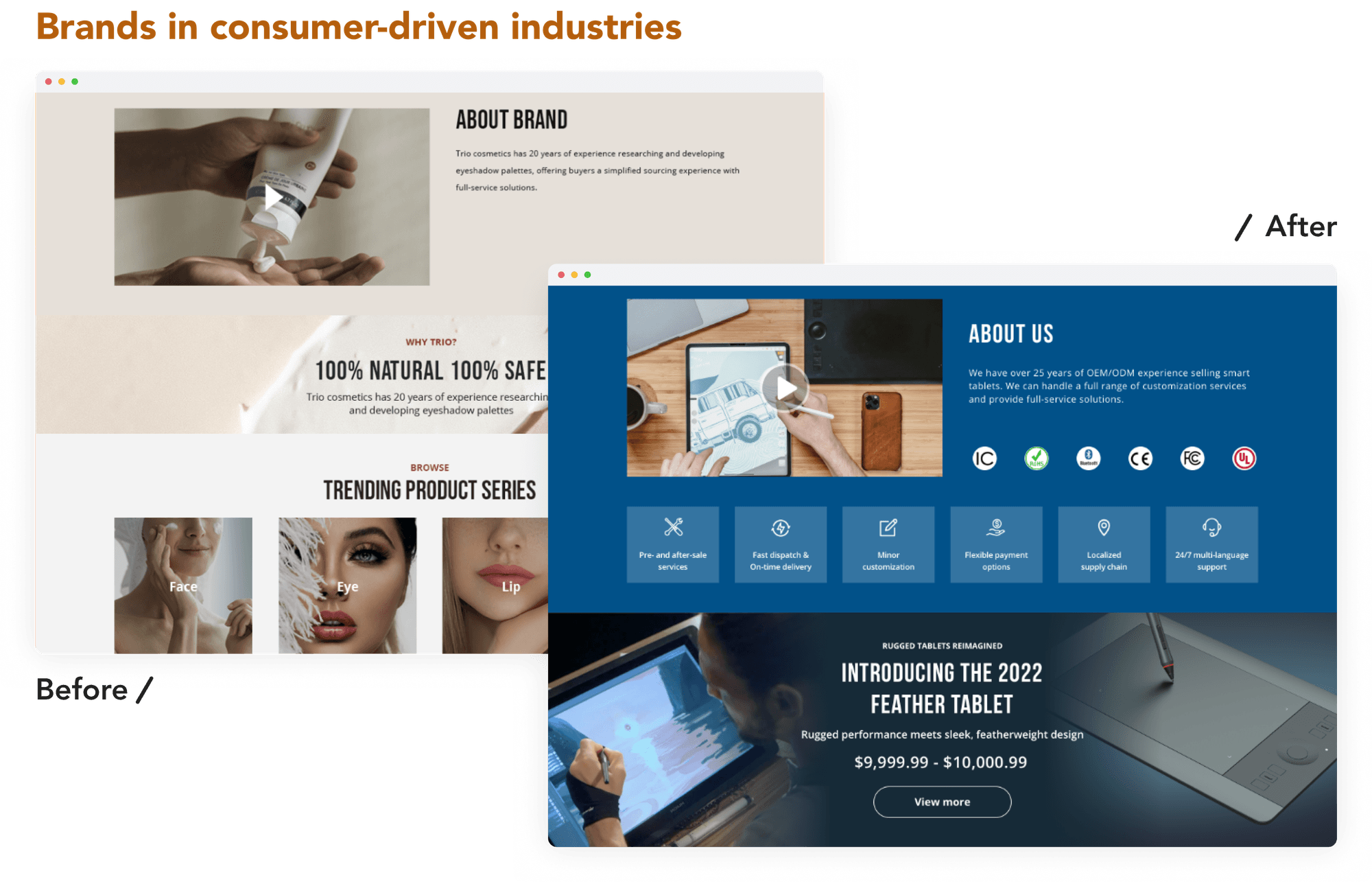
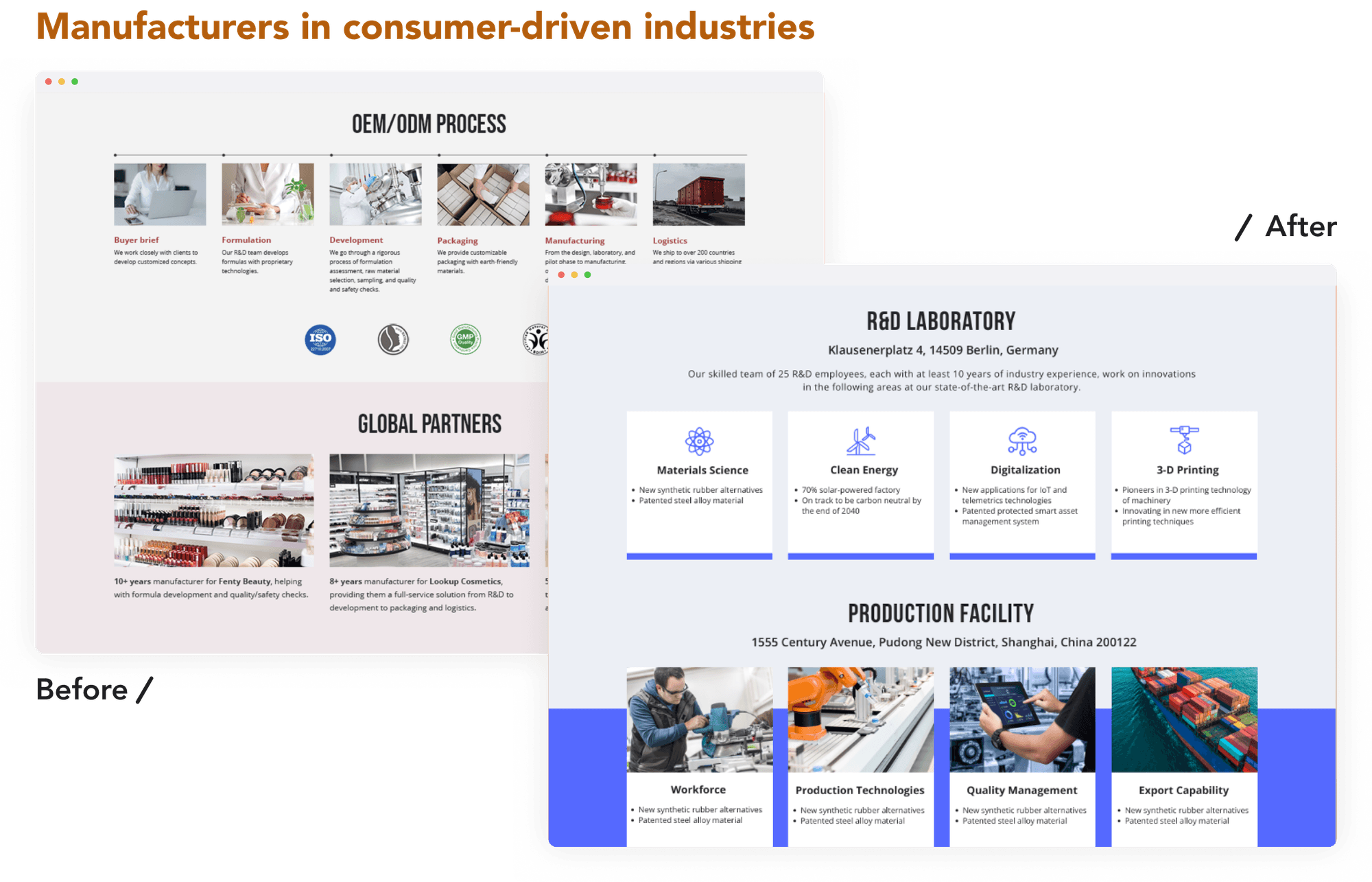
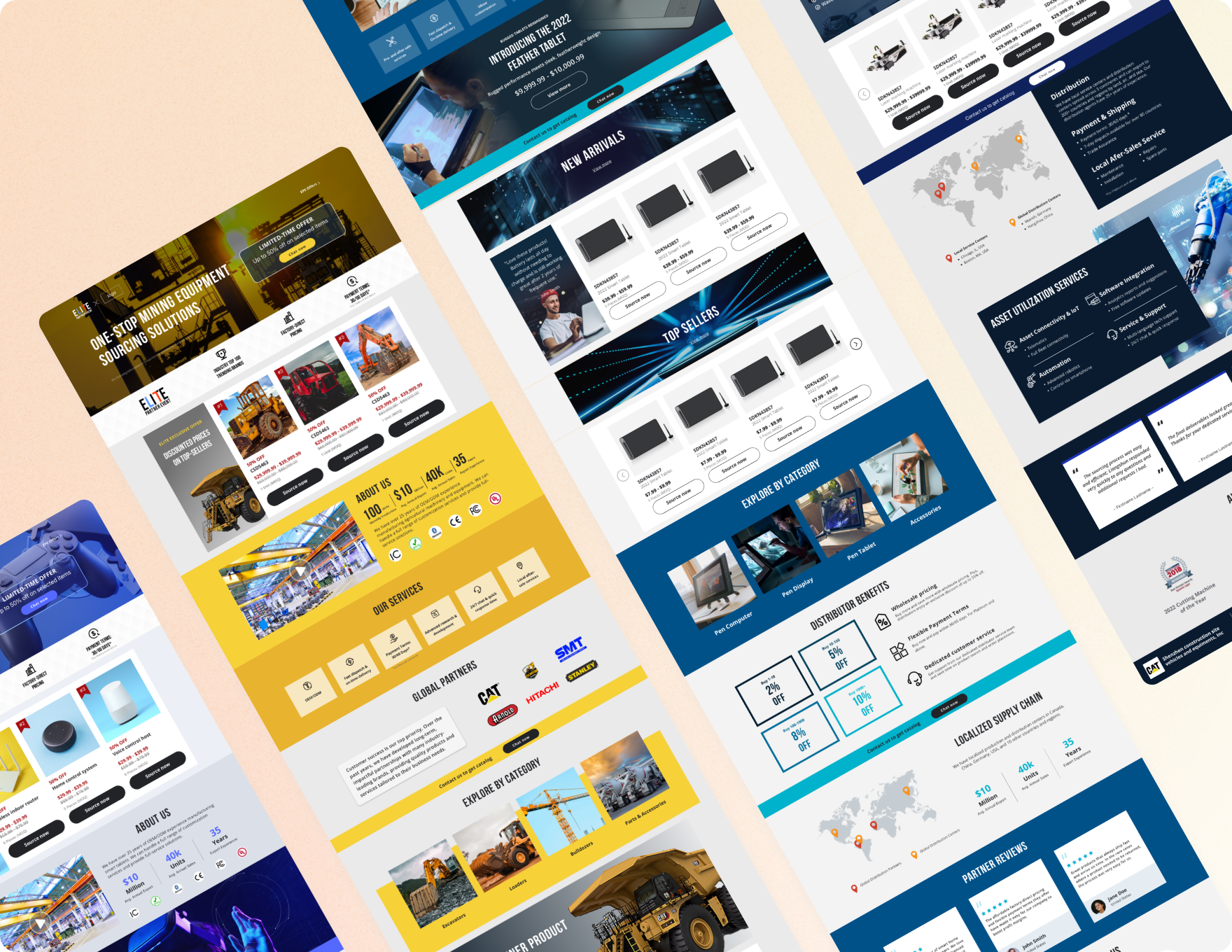
Create adaptable showcase page templates for various merchants, highlighting their characteristics, strengths, and competitiveness.
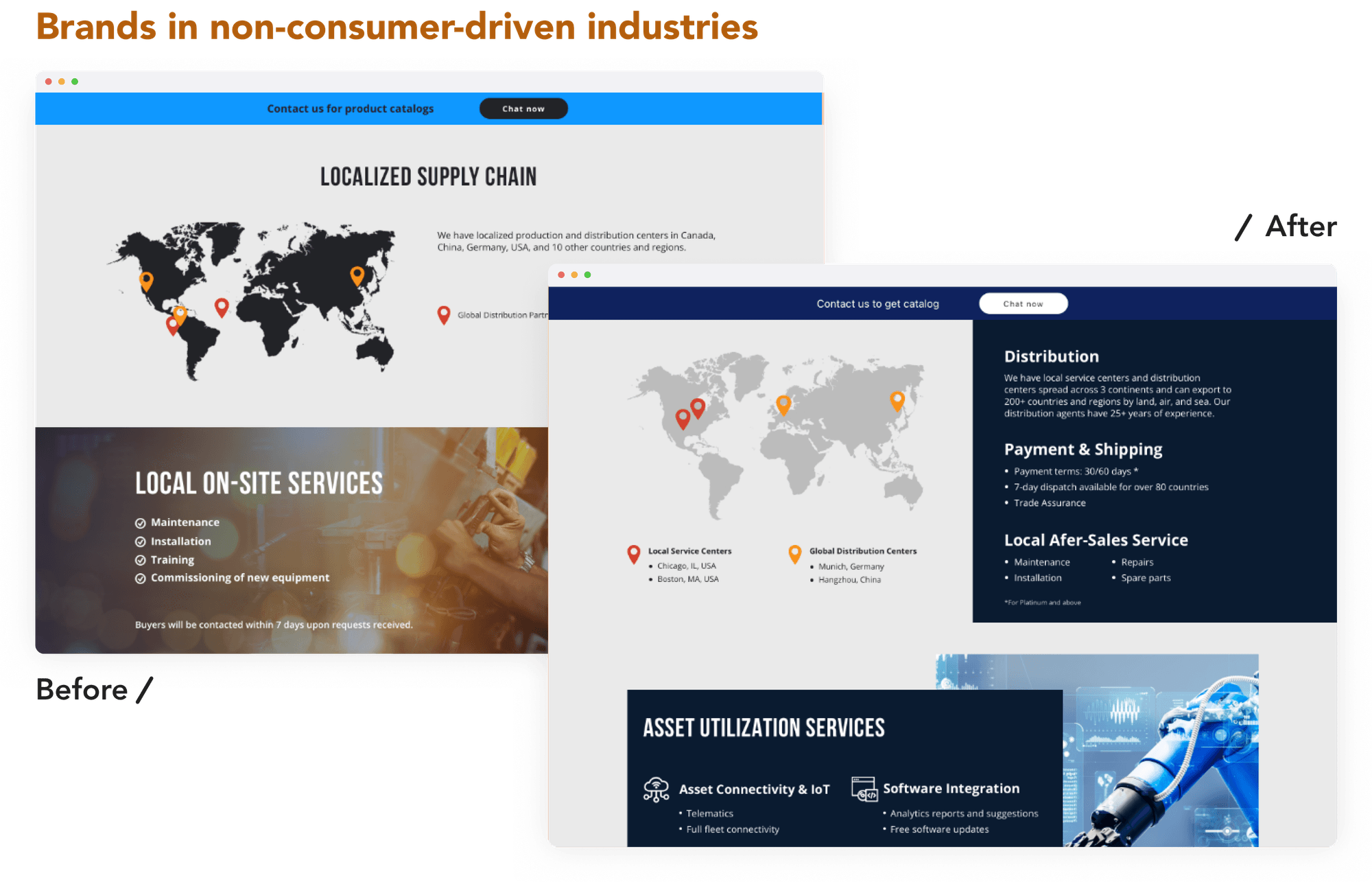
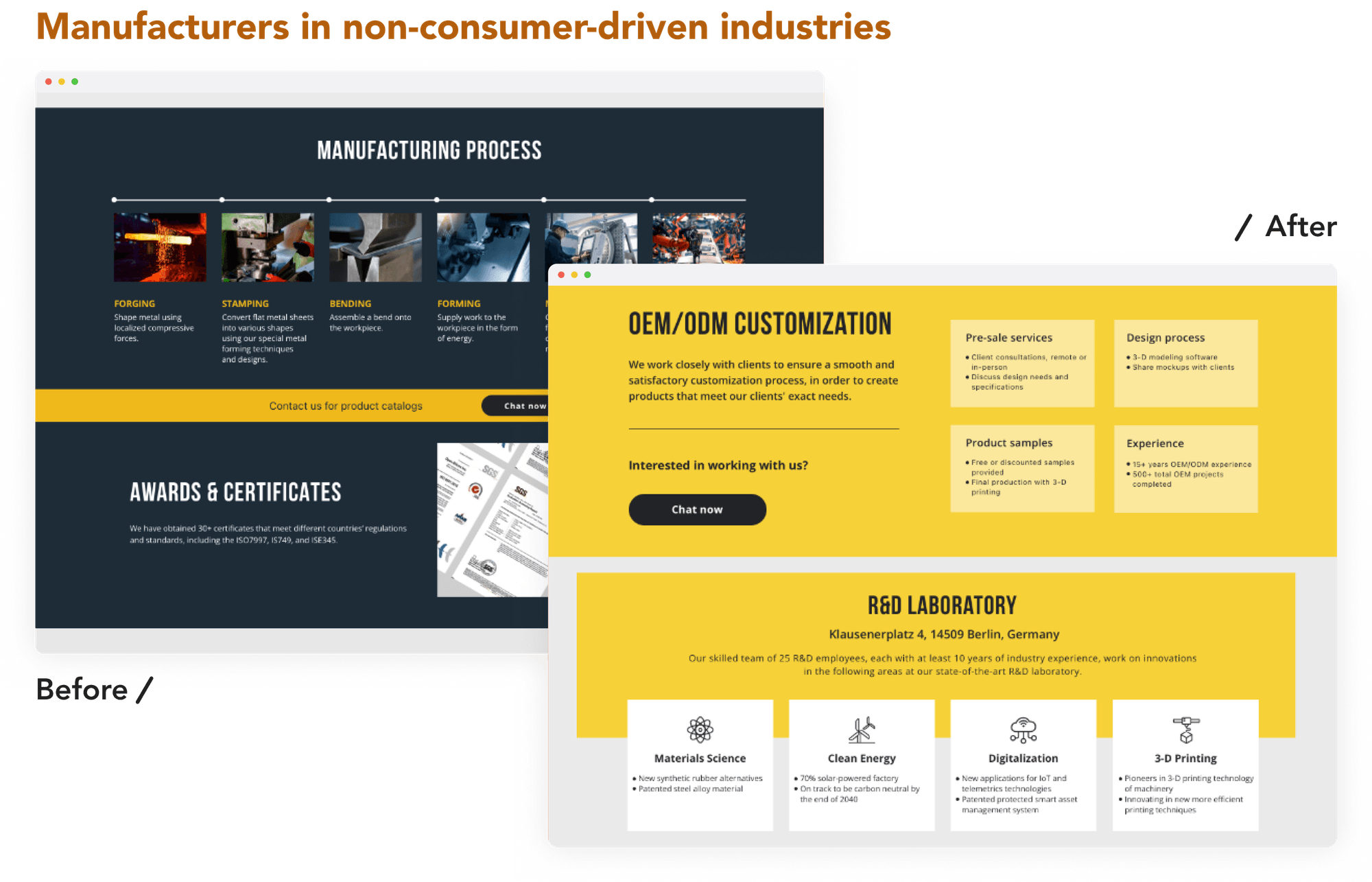
Outcome
Achieve a 15% increase in NPS score while saving 80% of project's time and budget.
After four months of dedicated work, we successfully launched the project in November 2022. Crafting 4 webpage templates tailored for 10+ industries streamlined design efforts and minimized costs, eliminating the need for individual templates per industry. The user response to our new templates was overwhelmingly positive, leading to a notable 15% increase in the Net Promoter Score (NPS).
Understanding
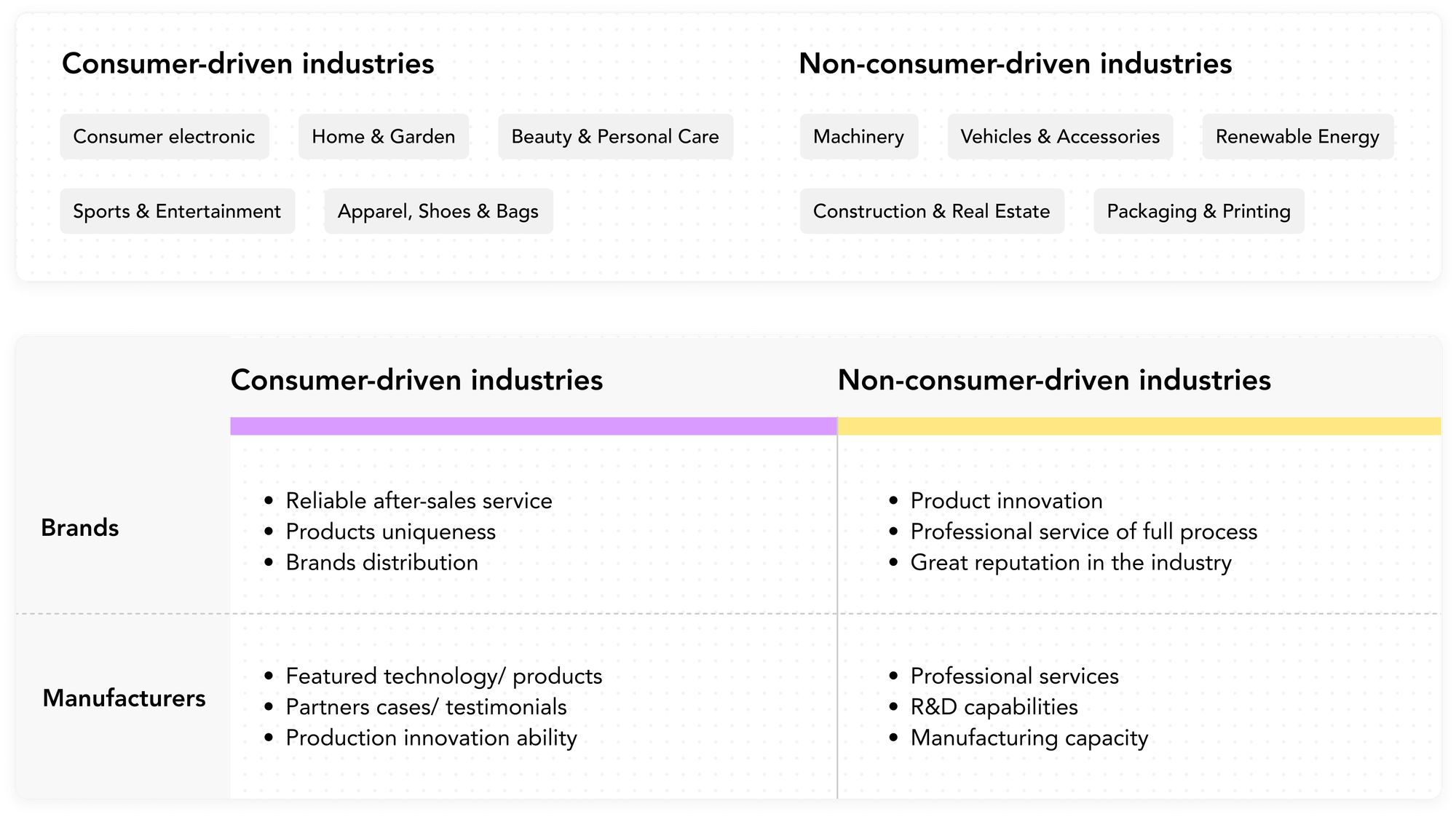
Buyer needs vary across industries, influencing their expectations from merchants.
We categorized all industries into Consumer-driven and Non-consumer-driven categories, adhering to industry standards. Insights from our research team reveal varying needs among different buyer types (brands and manufacturers), highlighting the top 3 aspects they prioritize the most.
Define
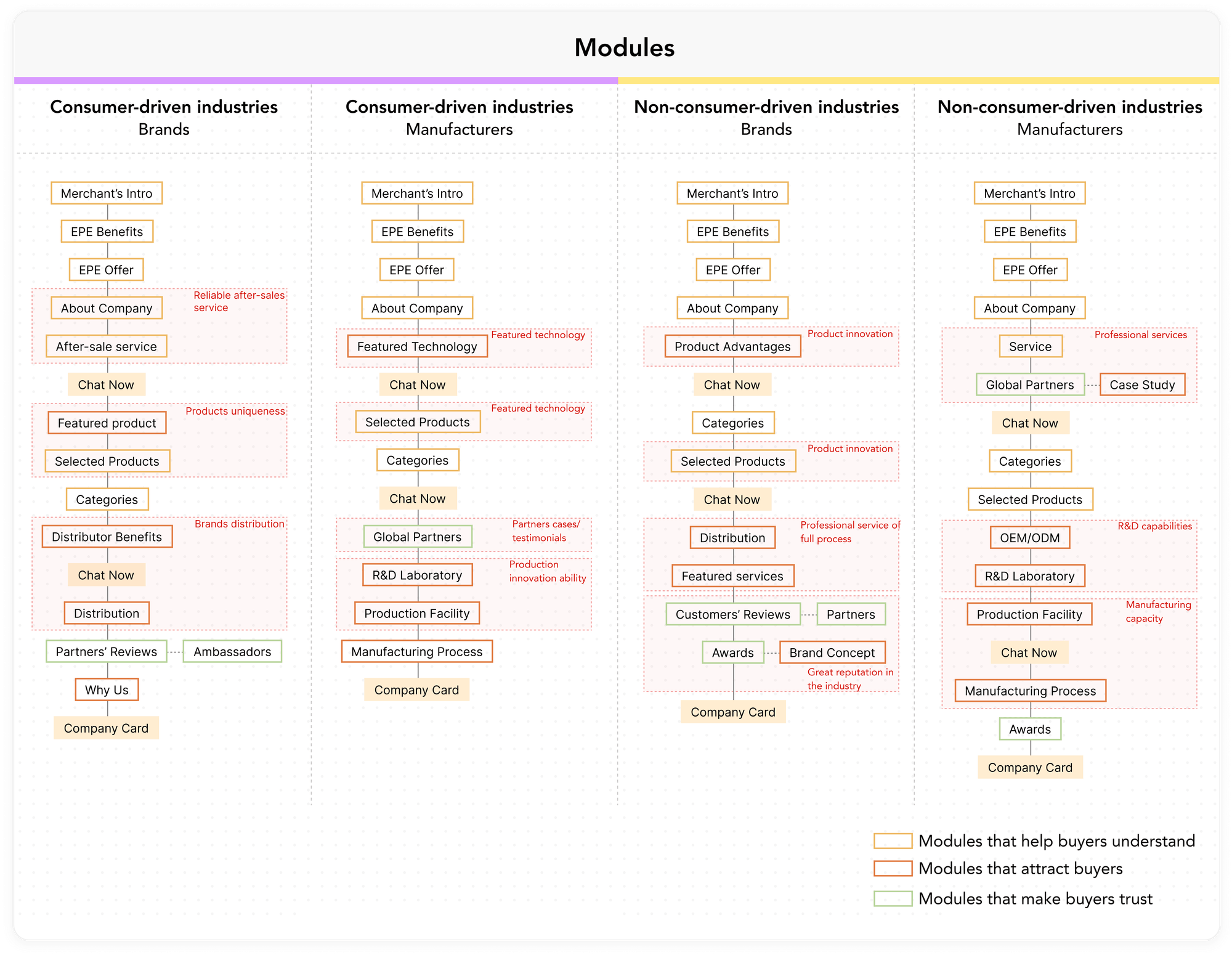
Arrange module sequences to align with buyers' expectations and business requirements.
Based on buyers' needs from user research findings and business requirements, I organized modules to let buyers understand, be attracted, and trust merchants. Additionally, I incorporated modules that highlight the aspects most significant to buyers.
Constraints
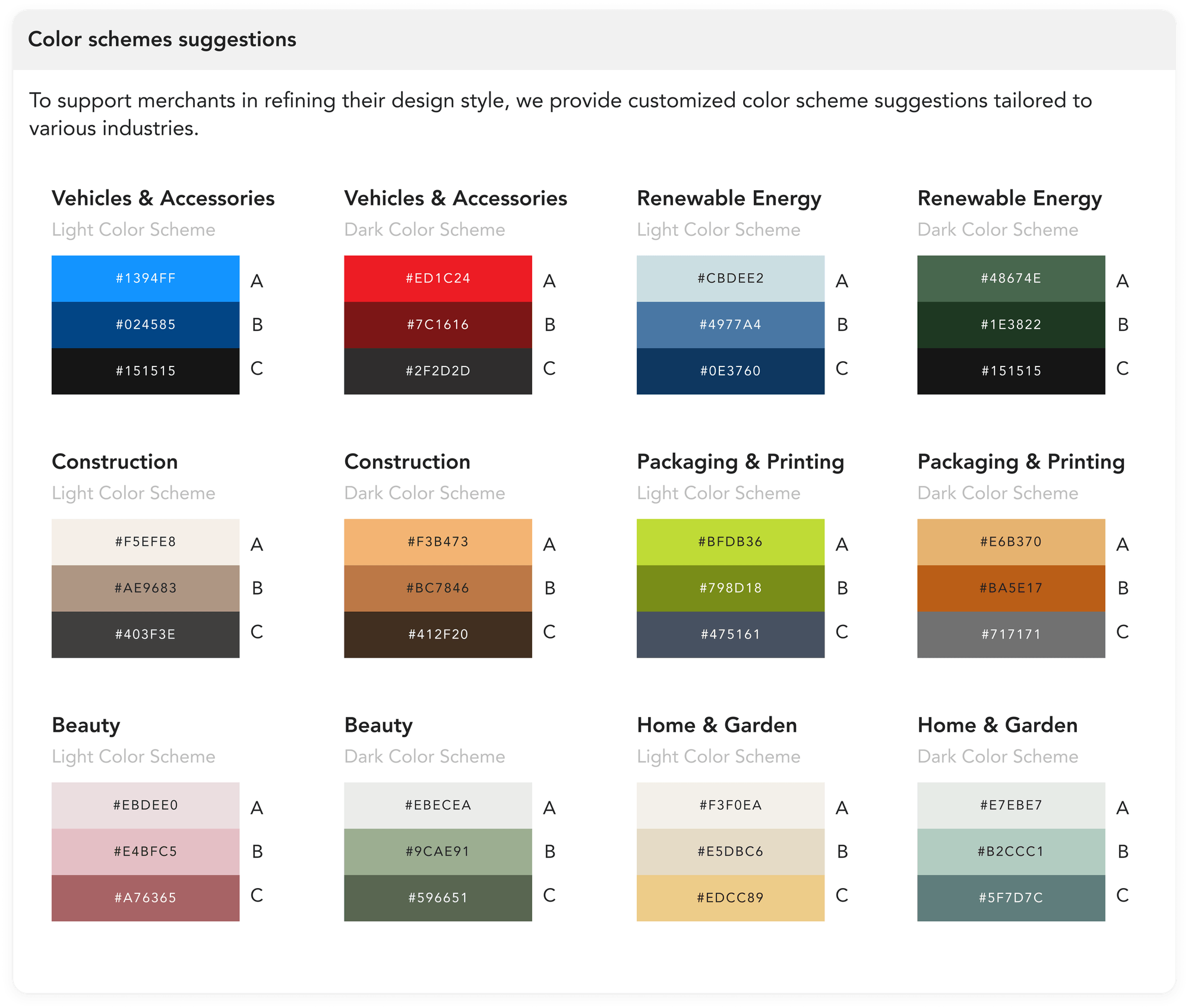
Design while considering technical feasibility, budget constraints, and merchants' design abilities.
After confirming the module sequence, I began creating each module. I engaged cross-functional teams to ensure comprehensive fulfillment of requirements from all perspectives. Throughout this process, I primarily encountered 2 constraints:
- Technical & budget constraints: During the stakeholders meeting, I learned that our outsourced developer team had already developed some modules, and the marketing stakeholders aimed to minimize changes from the developer side to conserve the budget. This limitation significantly restricted my design options.
- Merchants design abilities: Merchant design abilities vary, and they may not always adhere to our general template due to various reasons. Since we are offering a general template for all merchants, I must take this factor into consideration.
Strategy I
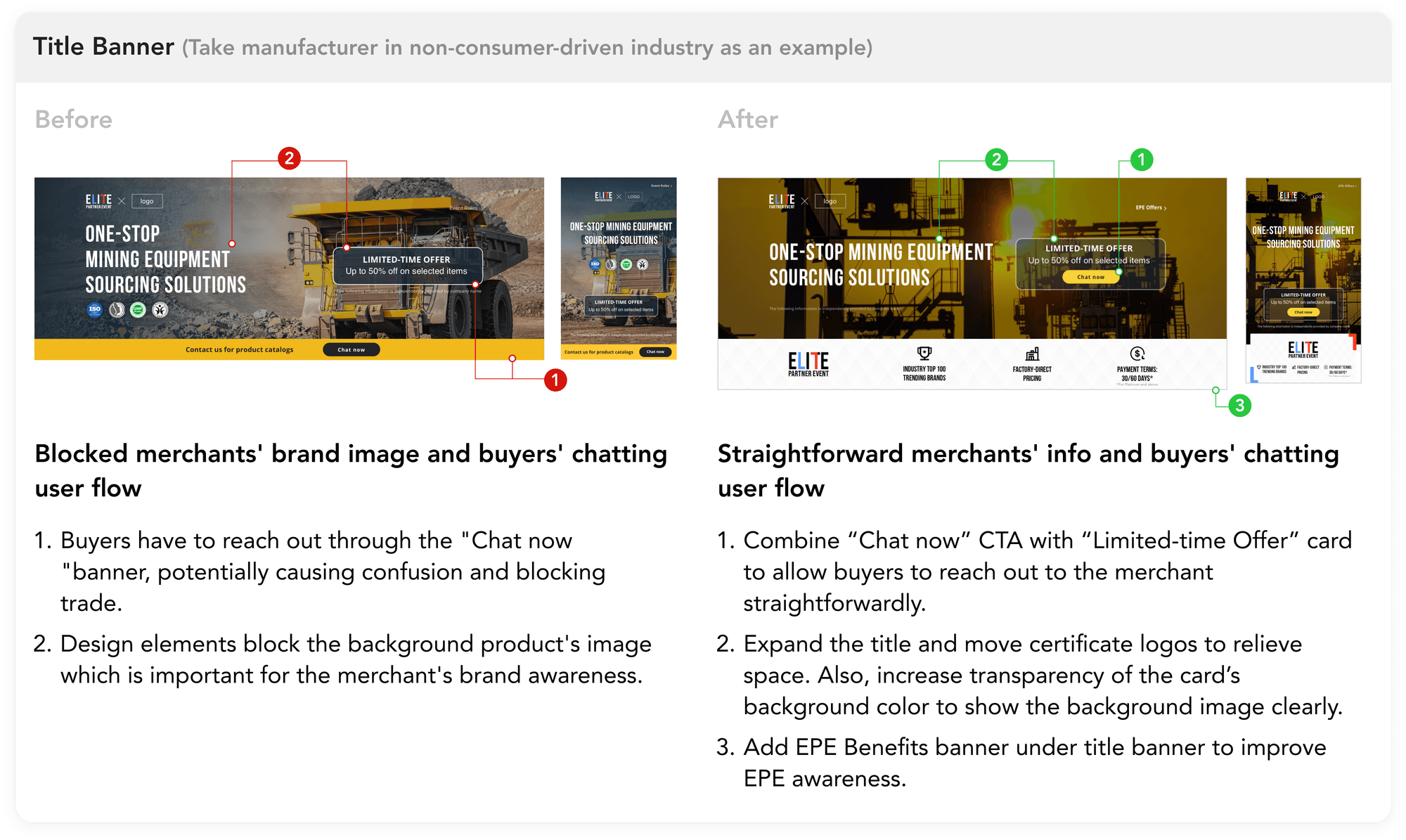
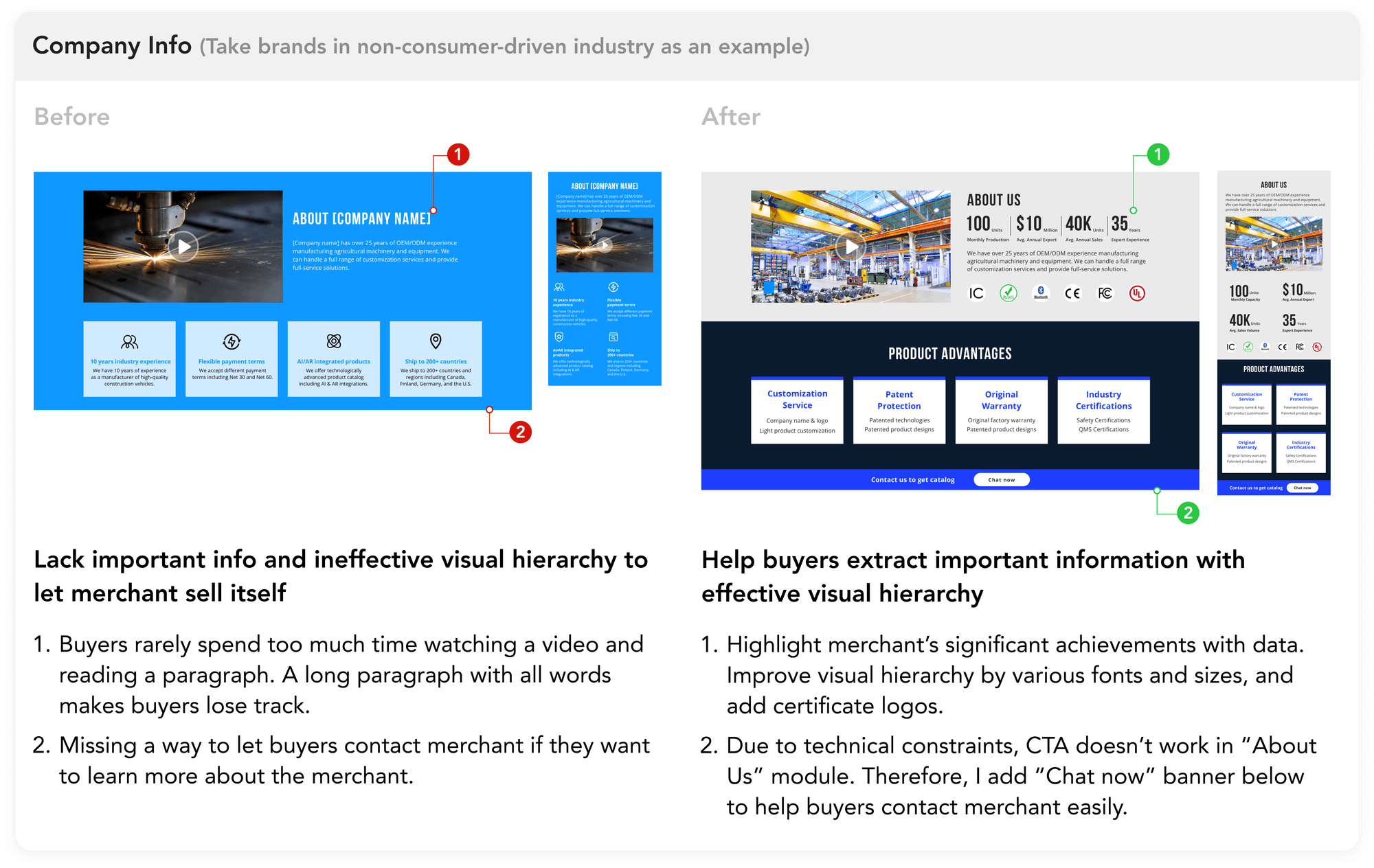
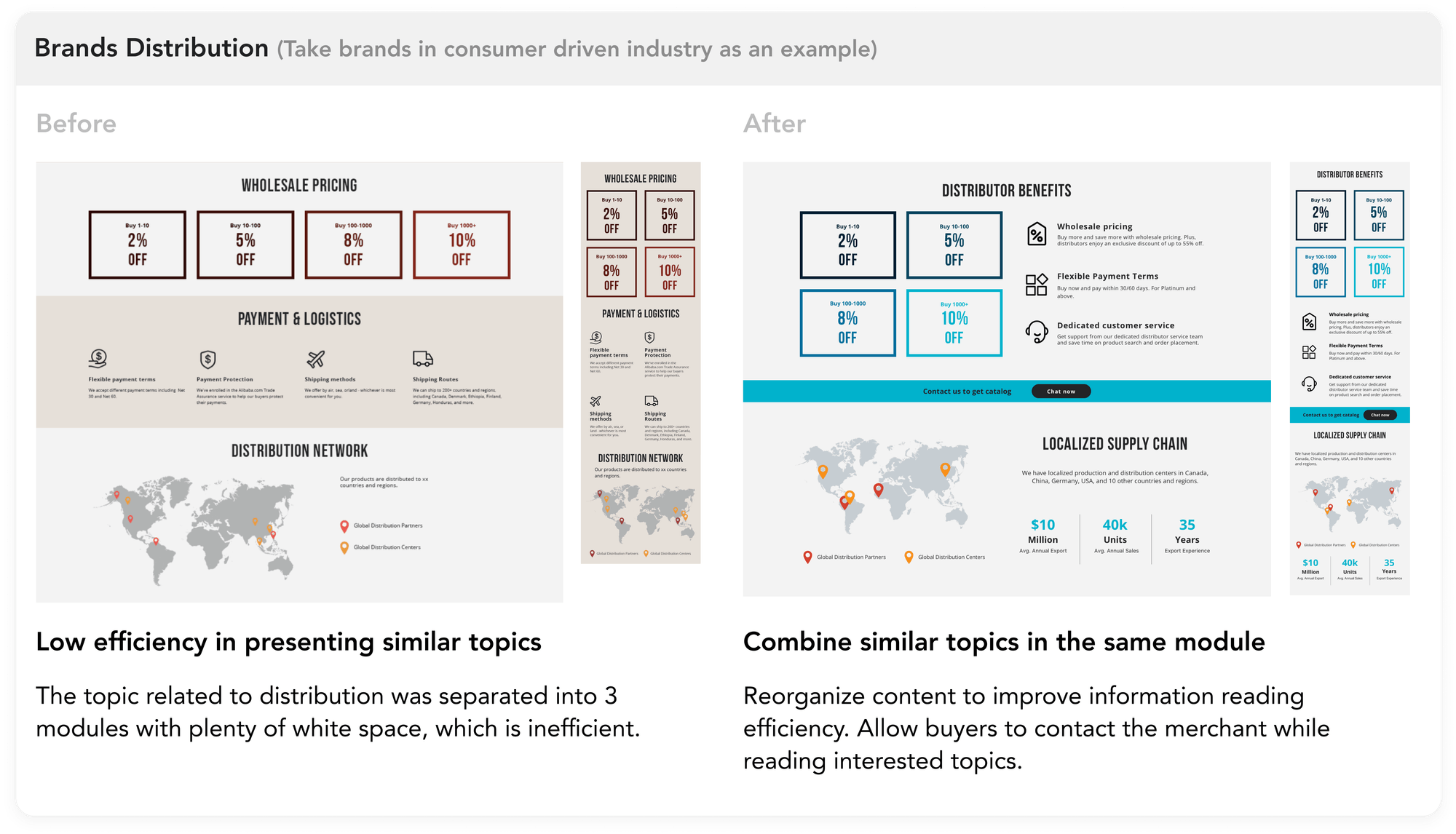
Efficiently integrate information while adhering to both technical and space constraints.
Given that I only had one page allocated for each participating merchant's showcase, my aim was to maximize its utility by integrating and organizing information to effectively present all essential aspects while following technical constraints.
Strategy II
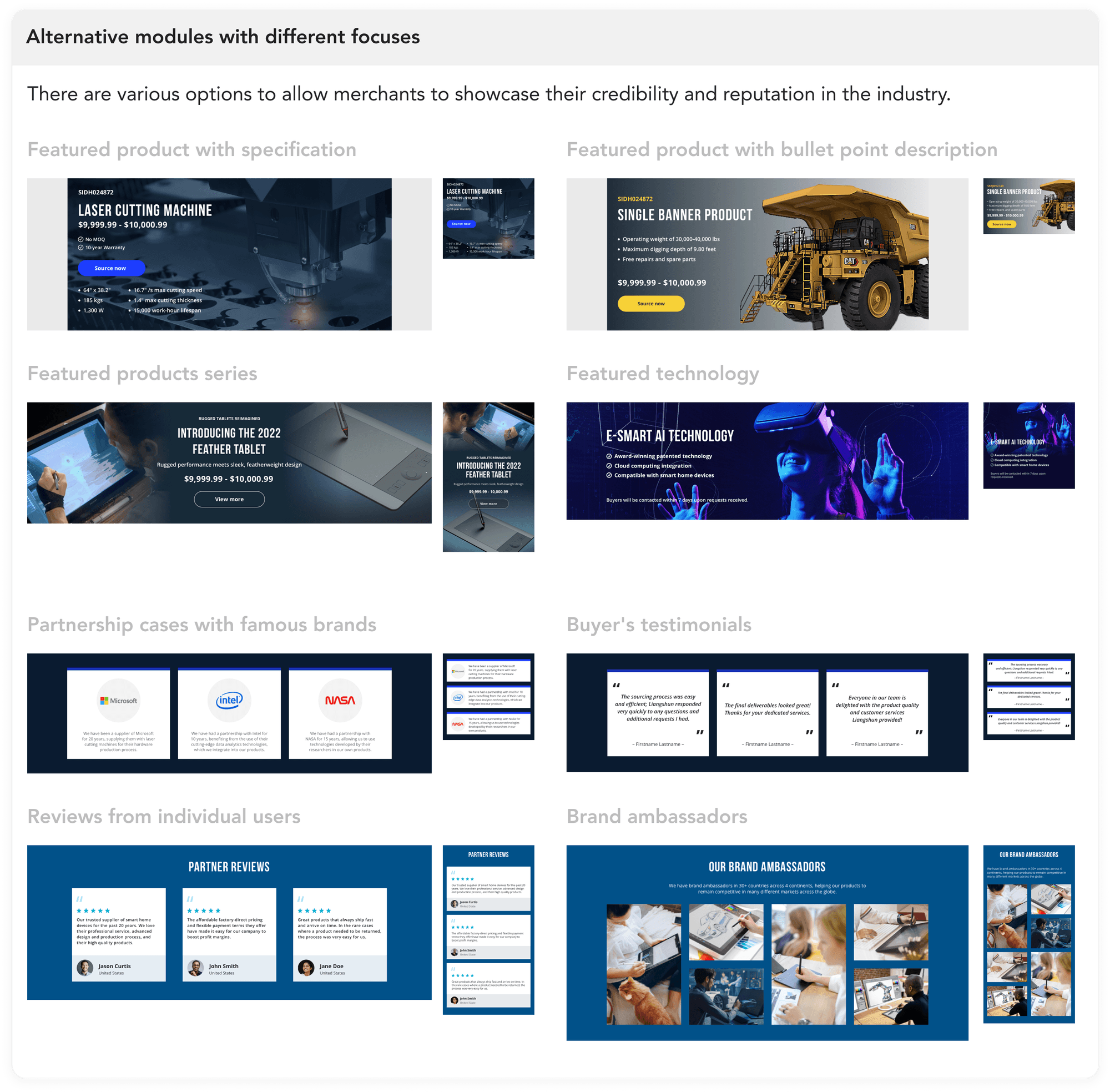
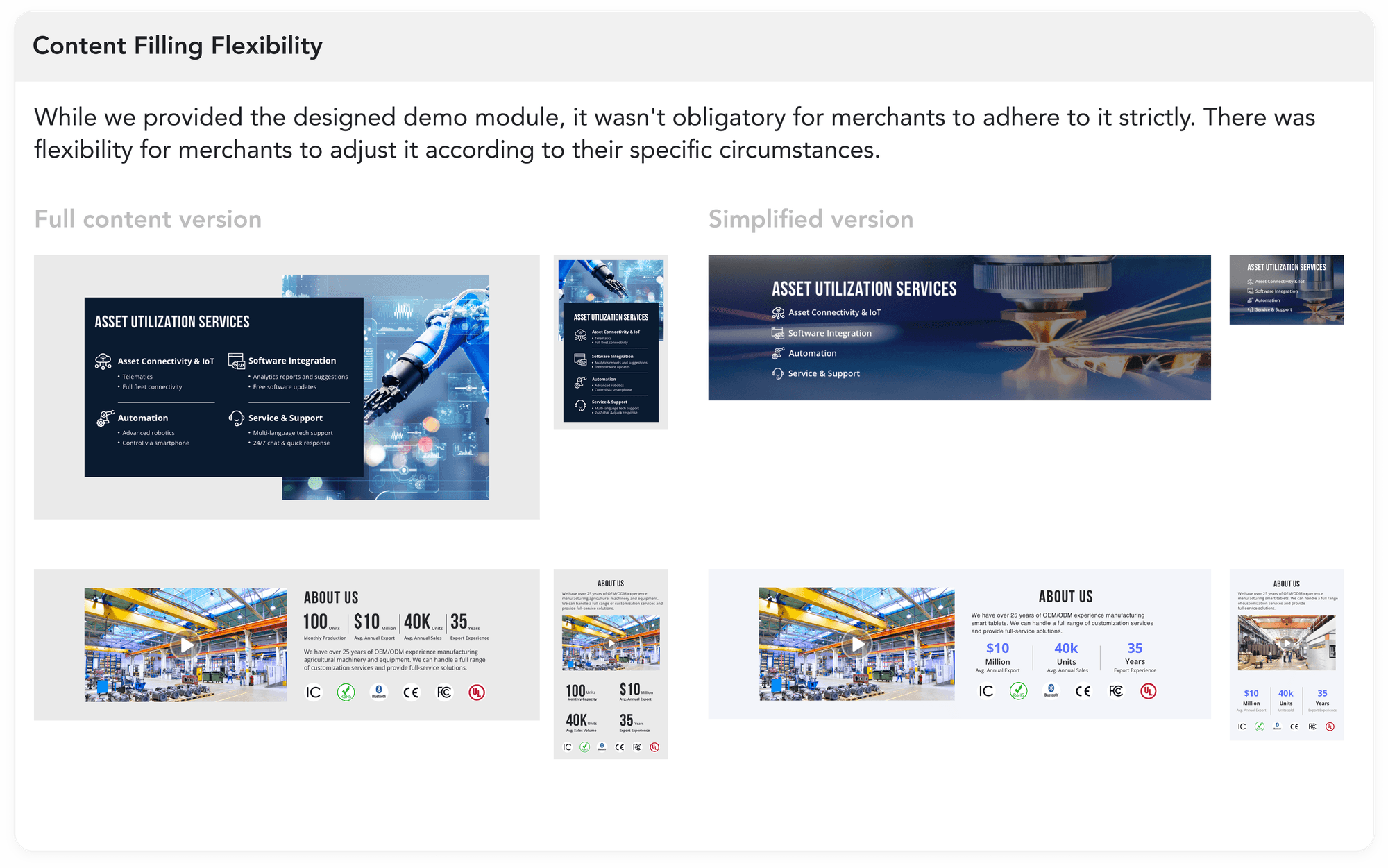
Tailor design flexibilities to accommodate the varying needs and abilities of merchants.
The most frequent feedback received from participating merchants was:
"We find it challenging to adhere to the provided template as our content diverges from its structure."
I took into account various scenarios while designing modules, recognizing the diverse design requirements and capabilities among merchants.
Reflection
No simple design.
In the beginning, I thought the design of this project could be effortless and straightforward as there were only several pages. However, it turned out that I was naive. Even only several pages and modules still need to consider many aspects, such as business goals, development constraints, merchants' design abilities, etc. Especially when we got feedback like "Our developers cannot do it." "This design is too complicated for our merchants' to follow." I learned a lot that a good design should satisfy every aspect.
Communication skill is as essential as design skill.
As a solo product designer on the team, I grew a lot in communication. I worked as a bridge to connect content strategists and visual designers. I translated research findings and business strategies into wireframes and explained the rationale behind wireframes to visual designers to make our demo webpages align with content and strategy requirements. During this process, I found how communication skill is important for a product designer.
Next steps
Enhance design consistency and iterate on design.
Despite having completed my contract and moved on from the team, I have identified some potential areas for future improvement:
- Update the components in the existing design system to ensure design consistency.
- Iterate design based on results of usability testing.